Have you noticed a trend of self-driving vehicle accidents in the headlines? It’s no surprise that there’s an uptick in these crashes. Autonomous vehicles (AVs) are an increasingly common sight on roads worldwide. They offer the promise of improved safety, convenience, and efficiency. However, while self-driving technology has the potential to reduce human error, it comes with its own unique set of risks. Accidents involving autonomous vehicles raise significant legal and ethical questions about liability, accountability, and regulations. Understanding the dangers of self-driving vehicle accidents is crucial for Florida’s policymakers as they continue to ensure our state and local laws protect drivers in this ever-changing legal landscape.
What are the risks of autonomous vehicles?
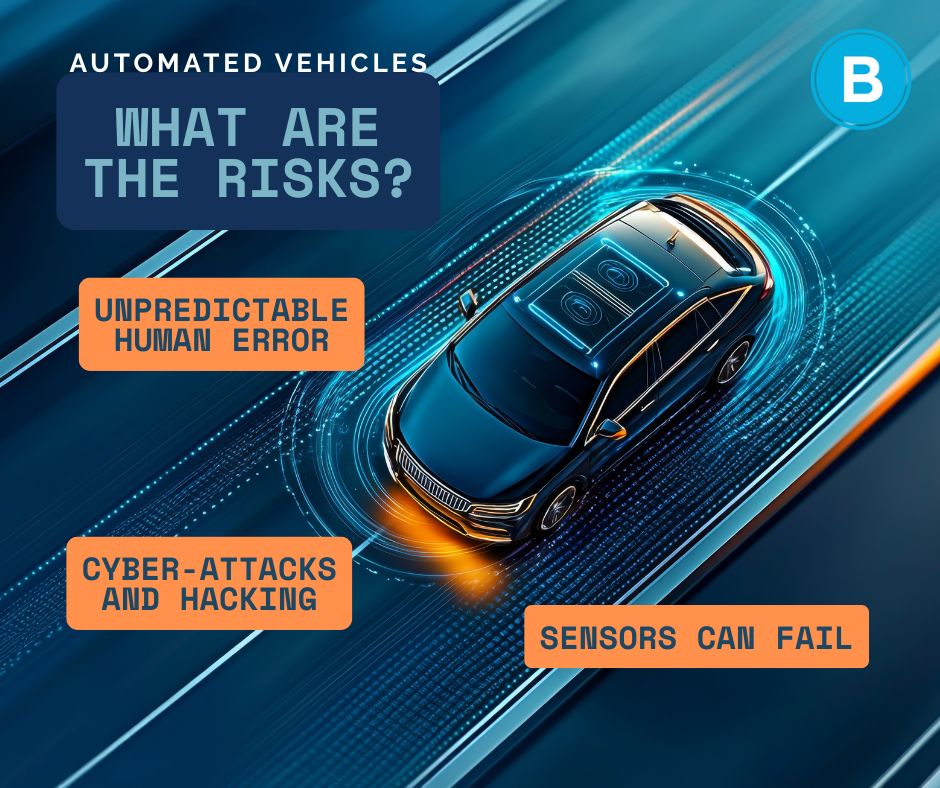
Despite the advanced technology behind self-driving cars, accidents involving these vehicles continue to make the news. Primary risks associated with AVs include:
Software and Sensors Can Fail
AVs utilize complex algorithms, cameras, and various sensors to navigate roads. LiDAR (Light Detection and Ranging) is at the core of autonomous vehicle function. This technology uses laser beams and pulses to measure movement and distance in the surrounding environment. The sensor then uses this information to create detailed 3-dimensional maps and models to assist with navigation. In instances of technical failure due to a software bug, sensor obstruction, or cyber-attack, self-driving vehicle accidents are inevitable.
Human Behavior is Unpredictable
Self-driving cars depend on predictable patterns. Artificial intelligence struggles with unexpected actions, and we all know human behavior is very unpredictable. Jaywalking pedestrians, erratic drivers, or unpredictable road conditions (like construction or heavy traffic) can seriously impact the effectiveness of AV technology.
Ethical Dilemmas in Self-Driving Vehicle Accidents
If a crash is unavoidable, how does an AV know whom to prioritize? Should it protect passengers inside, a pedestrian crossing the road, or a nearby vehicle? These ethical questions are beyond the capabilities of current AI technology.
Security Risks
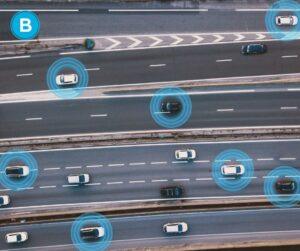
Automated vehicles are increasingly popular on Florida’s roads.
Hacking is a major threat to automated vehicle owners. These cars, trucks, and SUVs are vulnerable to hacking and cyber-attacks. These can result in hijacking of the vehicle from a remote location, data breaches, or deliberate crashes.
Lack of Accurate Traffic Laws
Current traffic laws are still catching up with the advances in AV technology. Our current rules and regulations on Florida’s roads were created for human drivers. Since developers and manufacturers have no universal framework governing how automated vehicles should be programmed, they may interpret or follow traffic laws differently. This leads to serious legal discrepancies in self-driving vehicle accidents.
For a free legal consultation, call 800 529 3030
What are the legal ramifications of self-driving car accidents?
When a self-driving vehicle accident occurs, determining liability is a complex issue. Unlike traditional car accidents where fault typically falls on a human driver, AV accidents may involve multiple liable parties. These include manufacturers, software developers, and vehicle owners. Legal implications depend heavily on the level of autonomy of the vehicle(s) involved and the details surrounding the accident.
Scenarios commonly faced by lawyers in self-driving vehicle accidents include:
Determining Product Liability vs. Driver Responsibility
A primary question after an AV accident is who’s at fault. Does the crash fall under product liability or traditional driver negligence?
If the accident resulted from a design flaw, software error, or mechanical failure, the manufacturer would most likely be held at fault under product liability laws. In contrast, if the vehicle still required human intervention to function, the driver could still bear responsibility. This could include driver distraction, driving under the influence of a controlled substance, or being asleep at the wheel.
Insurance Challenges in Self-Driving Vehicle Accidents
Much like lawmakers, insurance providers are working hard to catch up with AV technology. Traditional auto insurance policies assume driver fault, but automated vehicles complicate this as referenced above. Complexities like software glitches or third-party parts suppliers can play a part in AV accident cases.
Lack of Legal Precedents
With no set government regulations or legal precedents, Florida’s attorneys must carefully analyze self-driving vehicle accidents according to their jurisdiction. Key legal considerations they must face include:
- Federal vs. State Jurisdiction. In the United States, the National Highway Traffic Safety Administration (NHTSA) and other federal agencies set AV safety standards, while individual states regulate operational and insurance requirements. This occasionally leads to conflict in liability determination.
- Testing and Safety Standards. Governments must establish clear guidelines for safety standards, recall processes, and accident reporting requirements for automated vehicles. As AVs undergo testing and real-world deployment, these regulations will be necessary for preventing self-driving vehicle accidents.
Preventing self-driving vehicle accidents in the future: where do we start?
As some of Florida’s leading car accident attorneys, the team here at Brooks Law Group sees several key areas that should be addressed in the days ahead. Lawmakers, courts, and insurance providers must focus on:
- Establishing clear liability standards and a solid legal framework. This clarifies whether manufacturers, software developers, or vehicle owners should be held responsible for self-driving vehicle accidents.
- Updating insurance policies. Insurance companies are responsible for developing new policies that reflect changes in vehicle technology. The industry must develop new policies tailored to AV-specific risks, ensuring adequate coverage for consumers and businesses.
- Enhancing cyber-security regulations. Stronger cybersecurity regulations and liability provisions for data breaches must be implemented at all levels.
- Developing ethical and safety guidelines. Policymakers must work with AV developers to create guidelines for ethical decision-making for self-driving cars.
Autonomous vehicles are part of our future, but self-driving vehicle accidents don’t have to be. Until policies and regulations catch up with technology though, crashes involving AVs are likely. Have you or someone you love been injured in a crash with an automated vehicle? Brooks Law Group is leading the way in representing those involved in AV accidents, and we are here to make sure you get the justice and compensation you deserve. We work with clients throughout the state, from Tallahassee to Miami, with offices conveniently located near you. Our experienced team of car accident attorneys prioritizes communication and seeks to keep you informed and empowered throughout your case. We’re your #1 advocate, focusing on securing the settlement you need while you focus on recovery and healing.
As AVs continue to show up on Florida’s roads, rest assured knowing you can always Look to Brooks after an accident. Reach out for your free consultation!
Call or text 800 529 3030 or complete a Free Case Evaluation form